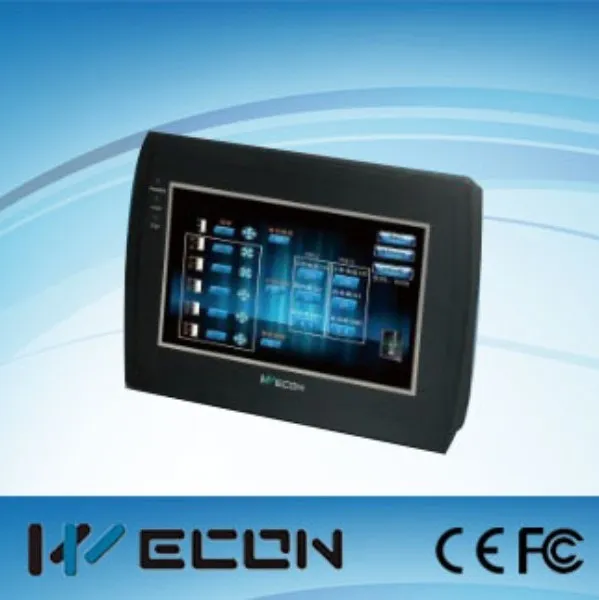
wecon dealer in coimbatore wecon dealer in hosur wecon dealer in tirupur wecon dealers in coimbatore wecon dealers in hosur wecon dealers in tirupur The WECON VD2F series consists of compact, pulse-type servo drives designed for general-purpose industrial positioning applications. They are part of the VD2 SA series of servo drives, known for being affordable, versatile, and offering high-performance features for motion control in machinery like robotics and conveyors. Key Features and Description: Performance: Utilizes IGBT PWM sine-wave current control for precise motor operation. Input Voltage: Designed for single-phase 200~240V AC, 50/60Hz. Encoder Compatibility: Compatible with 17-bit or 23-bit absolute encoders. Control Methods: Supports 8-segment internal speed command and 16-segment internal position command. Braking: Includes a built-in 750W braking resistor, with the option to switch to an external resistor. Communication & Tuning: Supports Modbus RTU/RS-485/RS-422, automatic load inertia identification, and rigidity self-tuning. Protection: Offers extensive protection against over-voltage, under-voltage, over-current, over-speed, over-load, over-heating, and encoder failure. I/O: Typically features 4 digital inputs and 4 outputs, with pulse input frequencies up to 500 kHz. Common Models & Specs: VD2F-003SA1P: 3A output current. VD2F-010SA1P: 10A output current. VD2F-014SA1P: 14A output current. The VD2F drives are specifically designed for space-saving installations due to their compact design, making them suitable for crowded industrial cabinets. #Wecon#WeconAutomation #WeconIndia#WeconPLC #WeconVFD#WeconHMI#WeconDrive #WeconServo #WeconBDboard #BDboard #Wecon #WeconAutomation #WeconBDboard #BDboard #WeconPLC #WeconVFD #WeconHMI #IndustrialAutomation #FactoryAutomation #ControlPanel #PanelBuilding #MachineAutomation #TamilBusiness #CoimbatoreAutomation #IndianAutomation #WeconEthernetSwitch #WeconSwitch #WeconSW05E #WeconHMI #WeconPLC #WeconVFD #WeconServo #WeconDrive #WeconControl #adhiraautomation #authorized delar for wecon products. An HMI (Human-Machine Interface) is a user interface or dashboard that connects a person to a machine, system, or device. While technically applicable to any screen (like a smartphone or an ATM), the term is most commonly used in industrial automation to describe the interaction between an operator and a control system. Inductive Automation Core Functions The primary goal of an HMI is to translate complex machine data into actionable information. AVEVA Monitoring: Visualises real-time data such as temperature, pressure, and production speed via graphs and charts. Control: Allows operators to input commands, adjust setpoints, or start/stop equipment through touchscreens or buttons. Alarm Management: Displays visual and auditory alerts if parameters deviate from safe ranges, enabling quick response to issues. Data Logging: Records historical data for trend analysis, troubleshooting, and predictive maintenance. Inductive Automation Human Machine Interface (HMIs) in Industrial Automation What is an HMI? Common Types of HMI Touchscreen Panels: The most common form, often integrated directly into industrial equipment. HMI + PLC Combo: A single hardware unit that combines the display with the Programmable Logic Controller (PLC), reducing wiring and space. Industrial PCs (Panel PCs): Powerful computers running Windows or Linux that can handle complex SCADA or MES applications. Web-Based/Mobile HMI: Allows remote access through browsers or mobile apps, enabling monitoring from any location. Headless HMI: Units without a built-in screen that output video to an external monitor or mobile device. Inductive Automation HMI vs. SCADA While often used interchangeably, they serve different roles in an industrial network: HMI is typically localized to a specific machine or area for direct operator interaction. SCADA (Supervisory Control and Data Acquisition) is a larger system that collects and analyzes data from multiple HMIs and devices across a whole plant or multiple sites. Inductive Automation Key Benefits Efficiency: Centralizes control, reducing the need for operators to manually check mechanical gauges. Safety: Allows operators to control machines from a distance and provides instant alerts for critical failures. Reduced Downtime: Predictive alerts help identify mechanical problems before they lead to a full breakdown. Inductive Automation Are you looking for information on a specific HMI brand (like Siemens WinCC or Allen-Bradley FactoryTalk), or do you need help with HMI design principles? AI can make mistakes, so double-check responses #HMI #HumanMachineInterface #TIAPortal #Siemens #PLC #IndustrialAutomation #AutomationEngineering #SCADA #ControlSystems #IndustrialIoT
Keywords