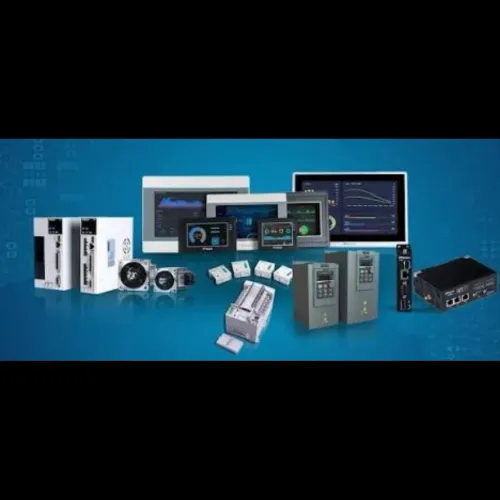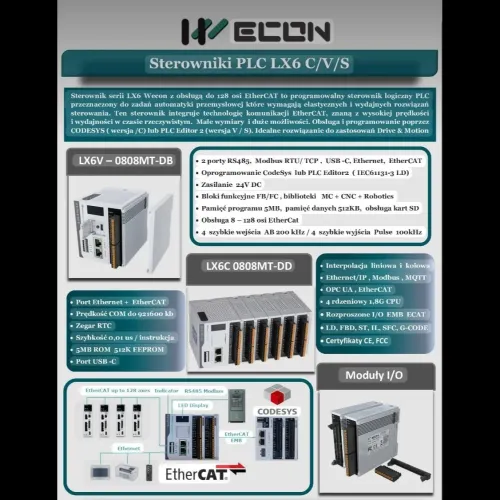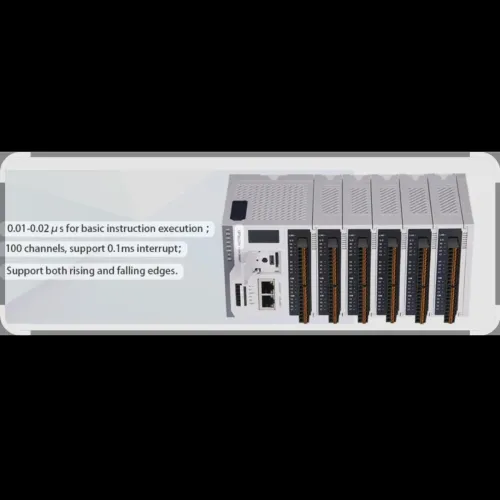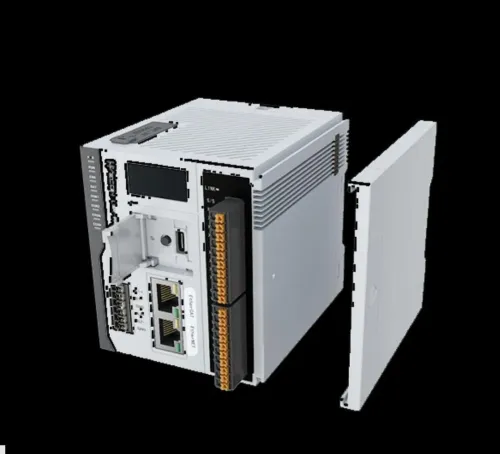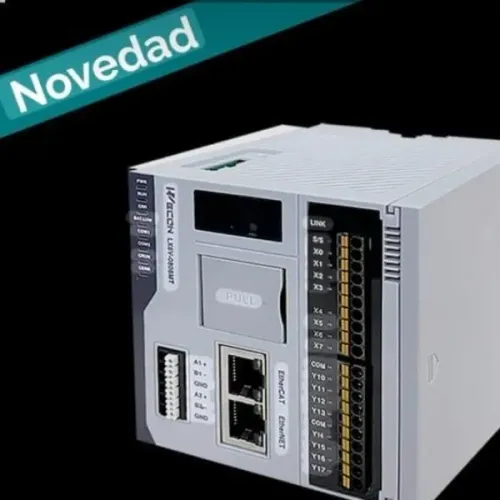
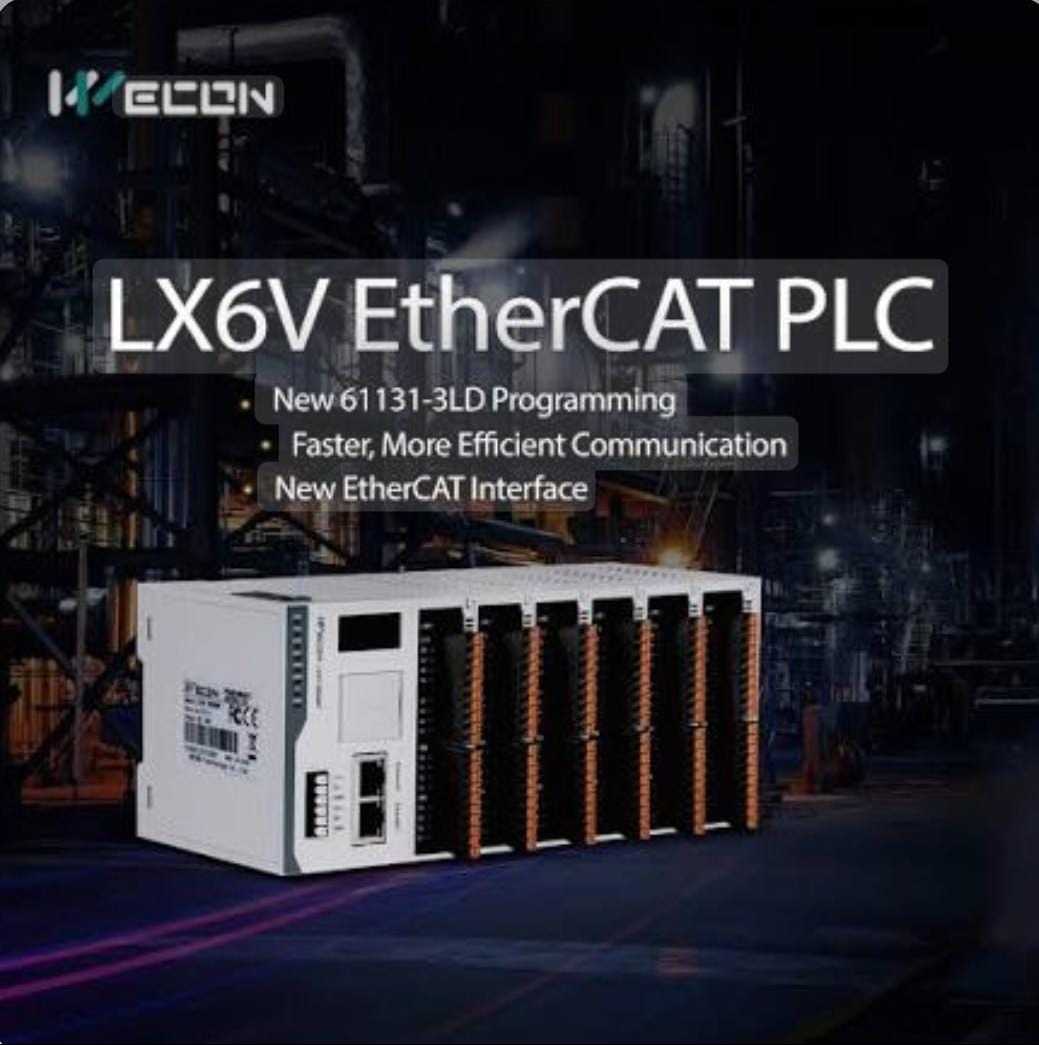
An EtherCAT PLC is an industrial programmable logic controller that uses EtherCAT (Ethernet for Control Automation Technology) as its primary fieldbus communication protocol.
Unlike traditional serial-based or slower Ethernet networks, EtherCAT passes a single data frame through all devices sequentially. Each device reads its target data and inserts its response 'on the fly' in microseconds, making EtherCAT PLCs the gold standard for high-speed, synchronized multi-axis motion control.
Core Advantages of EtherCAT PLCs
• Ultra-Low Latency: Achieves cycle times under 100 microseconds, which is crucial for perfect synchronization across multiple motors.
• Massive Axis Scaling: A single master controller can command dozens or even hundreds of servo drives (e.g., the Wecon LX6V supports up to 128 axes).
• Flexible Topology: Devices can be connected in a line, tree, or star structure without requiring expensive network switches.
• Line Redundancy: By forming a closed ring back to a second Ethernet port, the network remains fully operational even if a cable breaks.
Unlike traditional serial-based or slower Ethernet networks, EtherCAT passes a single data frame through all devices sequentially. Each device reads its target data and inserts its response 'on the fly' in microseconds, making EtherCAT PLCs the gold standard for high-speed, synchronized multi-axis motion control.
Core Advantages of EtherCAT PLCs
• Ultra-Low Latency: Achieves cycle times under 100 microseconds, which is crucial for perfect synchronization across multiple motors.
• Massive Axis Scaling: A single master controller can command dozens or even hundreds of servo drives (e.g., the Wecon LX6V supports up to 128 axes).
• Flexible Topology: Devices can be connected in a line, tree, or star structure without requiring expensive network switches.
• Line Redundancy: By forming a closed ring back to a second Ethernet port, the network remains fully operational even if a cable breaks.
Keywords